
Industry Data: More than 60% of medium‑voltage cable on‑site faults originate from defective cable termination. Improper termination triggers partial discharge, water ingress and insulation breakdown, causing unexpected outages within 1‑3 years after commissioning.
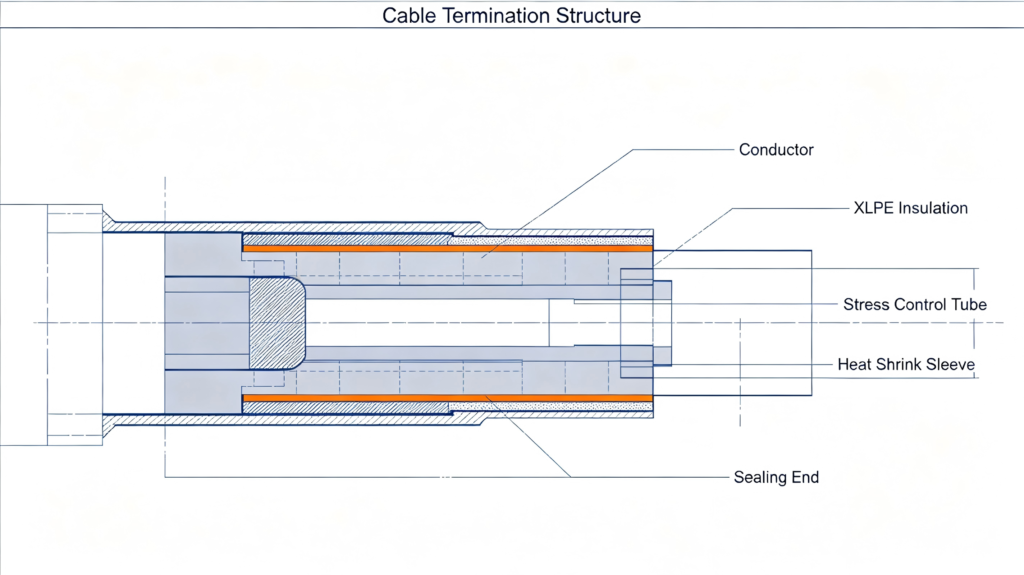
Cable termination covers the end‑sealing treatment for power cables. It controls electric‑field stress at cable cut ends, seals against moisture and dirt, and completes conductor connection to switchgear and transformers. Many field teams skip detailed requirements for stripping and stress‑control assembly, bringing hidden latent defects.
As a critical matching process after cable pulling tension standard construction, well‑executed termination directly decides long‑term cable reliability. This article sorts termination categories, standardized installation workflow, typical fault modes and practical prevention solutions to improve site construction quality.
What Is Cable Termination?
Cable termination is the end assembly fitted to cut power cable ends. It fulfills two core functions: electrical connection and environmental sealing.
Without qualified termination, electric‑field concentration damages XLPE insulation. Minor construction defects do not create immediate failure, yet greatly shorten cable service life and raise risks of cable water ingress and partial discharge. Poor termination is one major source of cable thermal aging inside cable terminal zones.
Main Types of Cable Termination
Different termination kits apply for distinct voltage grades and working environments. The table compares mainstream product solutions:
| Termination Type | Core Feature | Applicable Scenario | Construction Reminder |
|---|---|---|---|
| Heat‑shrink cable termination | Thermally shrunk tubing, cost‑effective | Indoor & general outdoor low‑medium voltage projects | Strictly control heating temperature, avoid burning tubing |
| Cold‑shrink cable termination | Pre‑expanded rubber, no heating required | Outdoor, high‑altitude, explosion‑proof sites | Keep support core pulling smooth, prevent component offset |
| Prefabricated silicone termination | Factory‑molded, stable electric‑field control | Substation, power station medium‑voltage cable | High precision requirement for cable stripping dimension |
Typical Failures Caused by Defective Cable Termination
Core Reminder: Termination defects are latent faults. Cables may pass routine insulation tests but fail under continuous load.
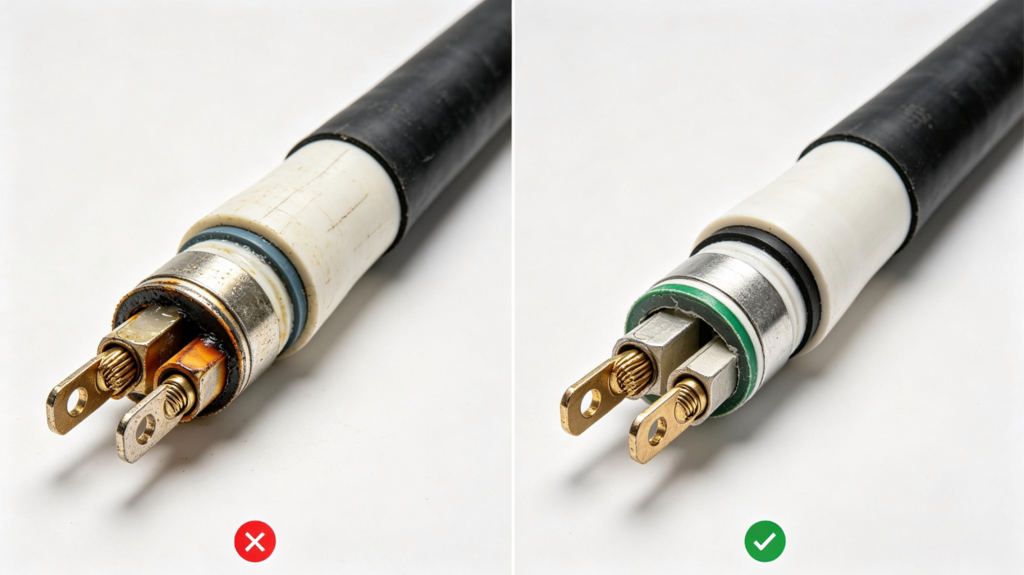
- Water ingress and damp insulation: Incomplete sealing or damaged outer rubber components let moisture invade the cable core.
- Partial discharge & flashover: Scratched XLPE main insulation or misplaced stress‑control parts cause concentrated electric‑field.
- Cable lug overheating and burning: Insufficient crimp force leads to poor conductor contact and abnormal temperature rise.
- Termination cracking and ageing: Over‑heating for heat‑shrink parts or unsuitable rubber for outdoor UV exposure.
Common On‑Site Construction Mistakes
Most termination failures root in non‑standard manual operation:
- Careless cable stripping: Scratch main XLPE insulation when removing outer sheath, armor and semiconductor layer.
- Dirty & moist working environment: Assemble termination under humid, dusty site without protective measures.
- Misplaced stress‑control components: Shift stress‑control tube from specified position, destroying electric‑field homogenization.
- Skipping inspection procedure: Power on directly after assembly without post‑construction electrical tests.
Standardized Installation Workflow for Cable Termination
To comply with cable termination specification and eliminate hidden defects, follow standardized operation below:
| Construction Link | Standard Operation Measures | Engineering Effect |
|---|---|---|
| Pre‑work preparation | Select matching termination kit by cable cross‑section, voltage grade and indoor/outdoor condition | Ensure component suitability for project environment |
| Cable stripping | Strip sheath, armor and semiconductor strictly per manual, protect main XLPE insulation | Avoid tiny scratches which trigger insulation failure |
| Component assembly | Fit stress‑control parts, insulating tubes and sealing accessories in correct sequence | Homogenize electric‑field and guarantee waterproof sealing |
| Conductor connection | Crimp cable lugs with matched tool, clean contact surface | Prevent over‑heating at connection points |
| Post‑installation test | Carry out insulation resistance test before energizing | Verify construction quality before putting into service |
Daily Site Management Specifications
- Confirm kit model matches cable parameters before starting termination work.
- Keep working area dry and clean; avoid operation under rainy or high‑humidity open‑air conditions.
- Train construction personnel for stripping and component installation requirements.
- Retain photos for key assembling steps for future project traceability.
FAQ About cable insulation resistance
A1: The three mainstream categories are heat‑shrink termination, cold‑shrink termination and prefabricated silicone termination. Each has targeted application for indoor, outdoor and substation scenarios.
A2: Defective termination causes water ingress, partial discharge, lug over‑heating and insulation breakdown. These latent defects produce cable thermal aging and unexpected power outages during long‑time running.
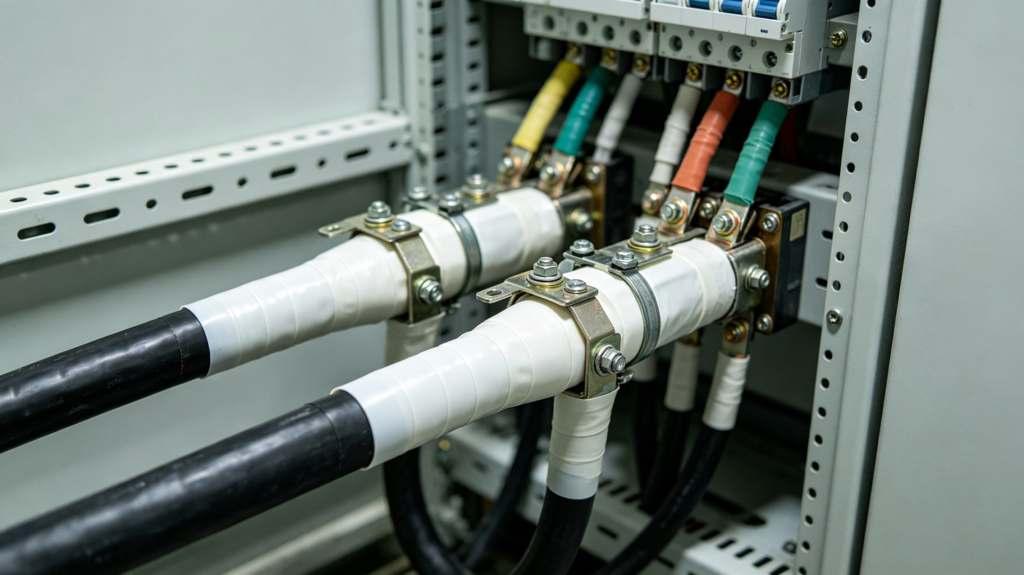
A3: Choose matched termination kits, strictly follow manufacturer stripping and assembling instructions, keep site clean and dry, and perform insulation test before energizing.
Conclusion
Cable termination is one vulnerable link of whole power cable systems. Improper installation brings latent defects that trigger various cable faults and unplanned outages. Combined with qualified pulling construction and waterproof protection, standardized termination can avoid most cable terminal‑zone hidden risks.
If you need reliable matching termination accessories for complex indoor‑outdoor power projects, Yidong Crosslinked Cable supplies full‑range cable accessories together with professional site technical guidance. Contact us for free technical datasheets and customized project quotations.