Industry Data: Short circuit failure accounts for more than 60% of sudden cable burnout and power fire accidents. Unlike aging faults, short circuit occurs instantly with strong destructive power, easily causing equipment scrapping and entire power system shutdown.
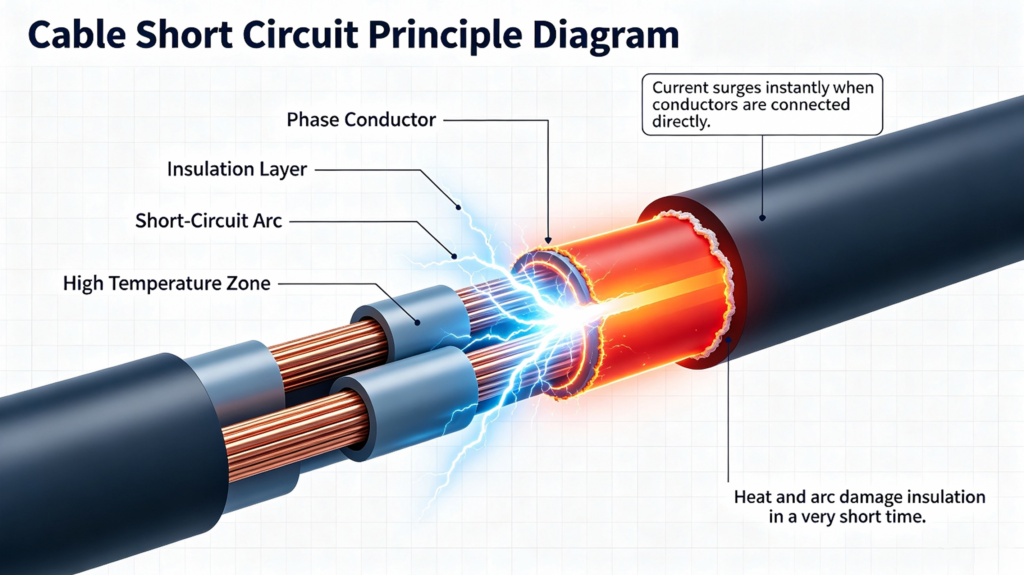
Cable short circuit is the most dangerous sudden fault in power distribution systems. It occurs when the live conductor is directly connected with the neutral line, ground line, or different phase lines, resulting in instantaneous surge current far exceeding the rated value. Short-circuit impact will instantly generate high temperature and electric arc, burning cables and equipment.
Many engineering teams only pay attention to daily load operation but ignore hidden dangers such as insulation damage, construction errors and improper protection settings. This article systematically sorts out the core causes, hazard levels, and standardized prevention measures of cable short circuits, helping enterprises eliminate sudden power failure risks in advance.
1. Four Core Types & Root Causes of Cable Short Circuit
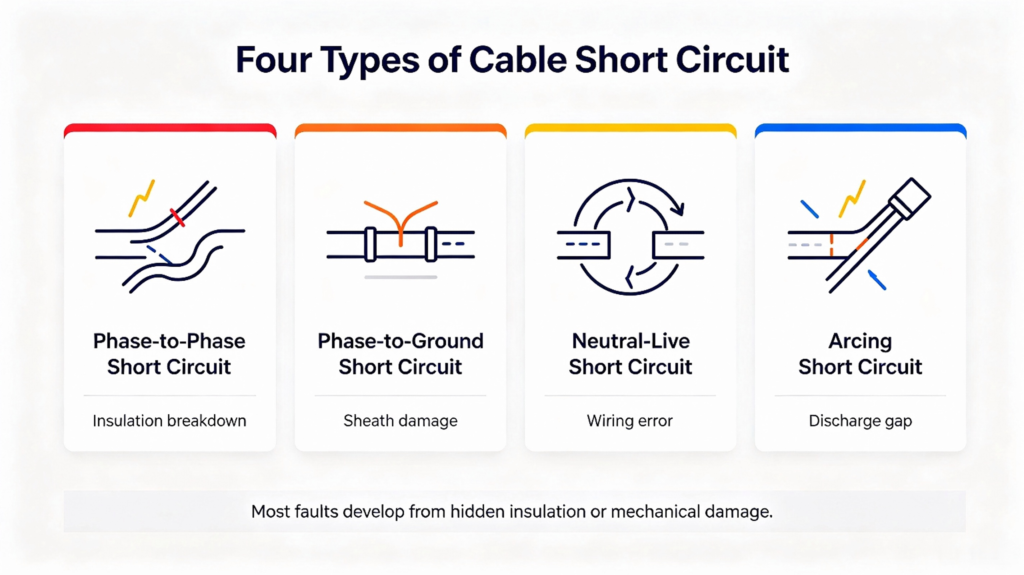
Cable short circuits in engineering are mainly divided into four categories, each with clear inducing factors. Most faults are caused by non-standard construction and long-term hidden damage:
- Phase-to-Phase Short Circuit: Caused by insulation breakdown, external extrusion damage, or cable melting due to overheating. Multiple phase conductors contact each other, producing extremely large short-circuit current, which is the most destructive fault type.
- Phase-to-Ground Short Circuit: Insulation layer damp, aging breakdown or sheath damage leads to live conductor contact with the ground. It is the most common short-circuit fault in buried cables and humid environments.
- Neutral-Live Short Circuit: Wiring errors, terminal aging and wire stripping overlap cause live wire and neutral wire direct contact. It frequently occurs in terminal distribution boxes and household power circuits.
- Arcing Short Circuit: Tiny insulation cracks, dust accumulation and damp air cause intermittent arcing discharge. This hidden fault is easy to ignore and will eventually develop into a complete short circuit.
2. Major Consequences of Cable Short Circuit Failure
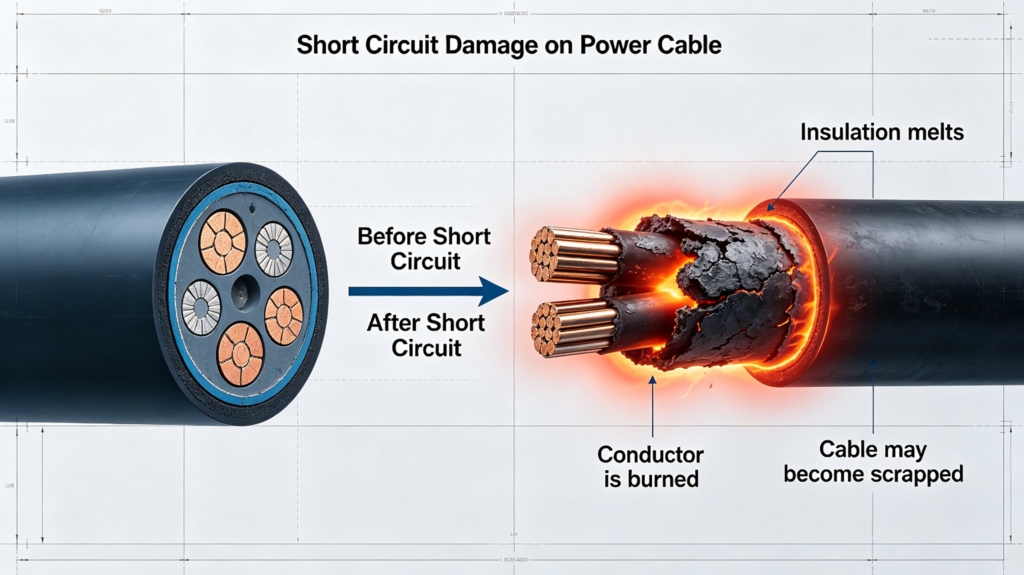
Short-circuit current can reach 10–20 times the normal operating current, bringing instantaneous and irreversible damage to the power system:
| Hazard Dimension | Specific Consequences | Risk Level |
| Cable Damage | Instant high temperature melts insulation and conductor, causing cable burning and scrapping | High |
| Equipment Failure | Surge current burns switches, transformers and electrical equipment | High |
| Power System Impact | Sudden tripping causes large-area power outage and production shutdown | High |
| Safety Accident | Electric arc and high temperature easily trigger electric shock and cable fire accidents | Critical |
3. Common Human & Environmental Induced Short Circuit Risks
Core Reminder: More than 80% of cable short circuits are not caused by product quality problems, but by irregular construction and inadequate on-site protection.
- Unstandard wire stripping and wiring: Excessive stripping length, overlapping wires and messy terminal wiring easily cause accidental contact short circuits.
- External mechanical damage: Post-construction excavation, mechanical rolling and pipeline extrusion damage the cable insulation, burying short-circuit hidden dangers.
- Long-term overload operation: Continuous over-current causes insulation thermal aging and melting, leading to phase-to-phase breakdown.
- Humidity and corrosion erosion: Underground water immersion, coastal salt fog and chemical corrosion damage insulation performance.
- Aging and dust accumulation: Long-term operation dust and conductive dirt accumulate on cable surfaces, inducing arcing short circuits.
4. Professional Short Circuit Prevention & Protection Solutions
Effective short circuit prevention covers three dimensions: product selection, construction standardization and electrical protection configuration:
1. Cable Selection Prevention
- Adopt high-insulation, flame-retardant XLPE cables to avoid insulation breakdown caused by high temperature and aging.
- Use waterproof and anti-corrosion cables for underground, coastal and humid workshops to prevent damp short circuits.
2. Construction Standard Prevention
- Standardize wire stripping length and terminal crimping to avoid exposed conductor overlap.
- Add mechanical protection pipes and warning signs for buried cables to prevent secondary construction damage.
- Reserve heat dissipation gaps for densely laid cables to avoid high-temperature melting insulation.
3. Electrical Device Protection
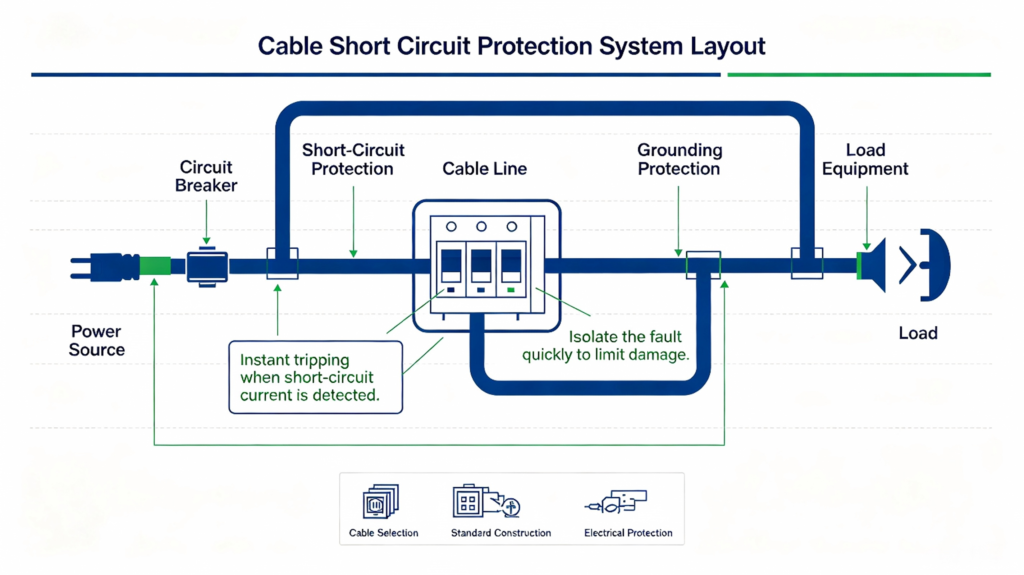
- Configure professional circuit breakers and short-circuit protection devices to realize instantaneous tripping protection.
- Regularly test cable insulation resistance to eliminate early aging hidden dangers.
5. Conclusion
Cable short circuit is the most destructive sudden fault in power distribution systems, which may cause cable burning, equipment damage and safety accidents. The main inducing factors include insulation damage, non-standard construction, overload operation and environmental corrosion.
Through scientific cable selection, standardized construction management and complete electrical protection configuration, short-circuit risks can be effectively avoided, ensuring long-term safe and stable operation of power lines.
Hunan Yidong Crosslinked Cable supplies high-insulation, flame-retardant and anti-corrosion power cables, effectively reducing insulation breakdown and short-circuit risks, providing reliable safety guarantee for industrial, construction and municipal power projects.
Official Website: https://yidongjiaolian.com